
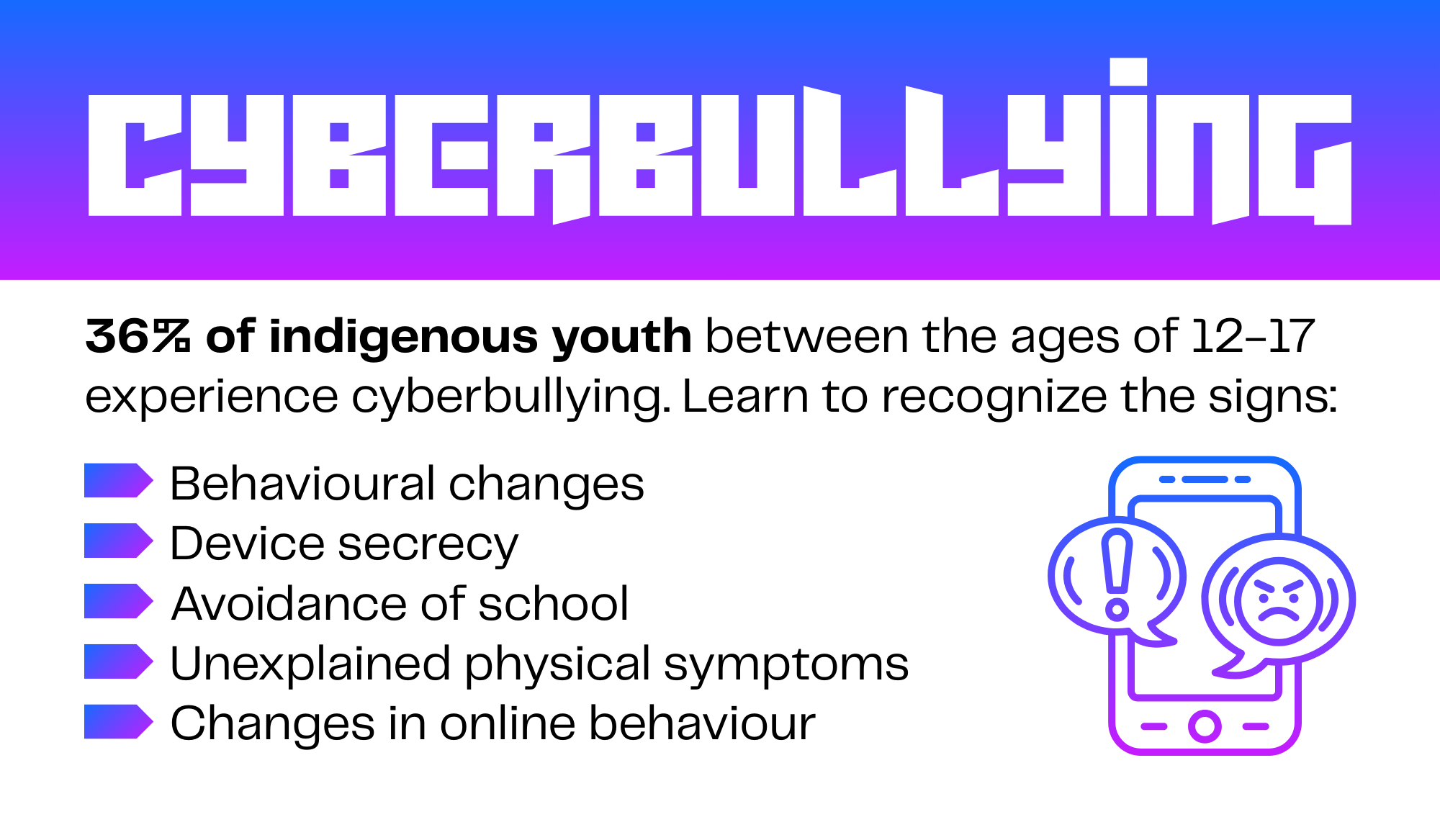
From a 2019 Canadian Census, 36% of indigenous youth between the ages of 12-17 experience cyberbullying. It’s expected that percentage is higher in 2026 as a lot more children have their own cell phones.
What are the signs that your child is being bullied?
- Behavioural changes – signs of withdrawal from friends, reluctance to use devices, sudden changes in mood.
- Device secrecy – your child starts hiding their device or quickly changes the screen when you approach.
- Avoidance of school – your child expresses desire to avoid school or shows signs of distress about going to school.
- Unexplained physical symptoms – complains of stomachaches, headaches or other physical symptoms without clear cause can sometimes be a link to bullying.
- Changes in online behavior – if your child stops using social media or their favorite games or if they seem nervous when receiving messages, these could be red flags.
What can you do as a parent?
- Start a conversation – approach your child gently and share your concerns. Encourage them to share their feelings and experiences.
- Monitor online activity – keep an eye on your child’s online interactions. Check their social media accounts and learn about the apps they use. Setting up parental controls can manage their online environment.
- Document evidence – if you discover your child is being bullied, document the incidents. Take screenshots of messages or posts that are harmful as this evidence may be necessary for police involvement.
- Involve school authorities – reach out to your school counselor or principal. Schools often have policies about bullying, and they can provide support and resources.
- Encourage resilience – help your child build resilience by discussing coping strategies and encouraging them to engage in positive activities that boost their self esteem.
By recognizing the signs of cyberbullying and taking proactive steps, you can help protect your child and support them through this challenging experience.


