
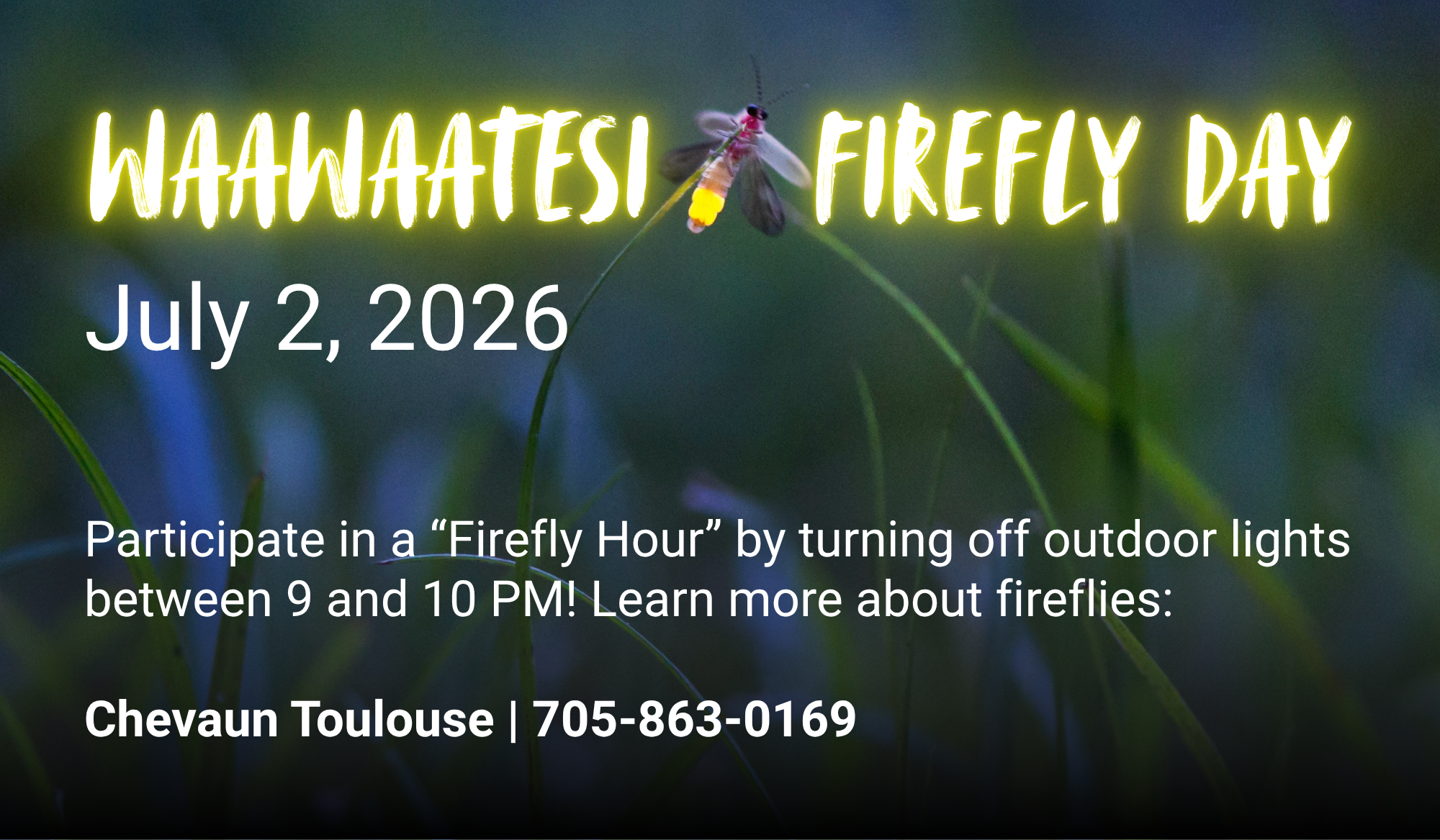
Waawaatesi (pronounced wah-wah-tay-see)
- Singular: Waawaatesi
- Plural: Waawaatesiwag / Waawaateswag
Waawaatesiwag (fireflies) are fascinating nocturnal insects whose glowing displays are an important part of healthy summer ecosystems. They require moist habitats, dark nights, and undisturbed ground cover to complete their life cycle.
How to Celebrate
Participate in a "Firefly Hour" by turning off outdoor lights between 9:00 p.m. and 10:00 p.m. to let the insect's mate and glow without light pollution.
You can learn more or join virtual events through the Xerces Society.
How You Can Help Waawaatesiwag
To help Waawaatesiwag (fireflies), provide a safe, natural habitat and eliminate threats in your yard. You can easily attract and protect them by maintaining damp leaf litter, eliminating harsh outdoor lighting, stopping the use of pesticides, and leaving areas of your lawn unmowed.
Let It Grow
- Leave a buffer of unmowed, long grass.
- Avoid raking up all fallen leaves or deadwood at the edge of your property.
- Firefly larvae (glowworms) spend their winters beneath fallen leaves and in damp soil.
- Instead of removing all leaves, leave a section of your yard unraked or use collected autumn leaves as mulch in your garden beds so larvae can survive and hibernate.
Reduce Light Pollution
- Dim the Lights — Turn off decorative or high-intensity outdoor lights after 9:00 p.m. during the summer, or switch to motion-sensing, warm-white LEDs (<3000K).
- Turn Off Outdoor Lights — Waawaatesiwag (fireflies) rely on darkness to flash and locate their mates. Bright landscape and security lights—or even light spilling from windows—disrupt their mating rituals.
- Use Smart Lighting — If exterior lighting is necessary for security, install motion-sensor lights or use low-wattage, warm-toned bulbs aimed downward.
Stop Using Pesticides
- Skip the Sprays — Eliminate synthetic pesticides to protect fireflies and their food sources. You can explore the Xerces Society Firefly Conservation Guide for additional tips.
- Avoid Chemicals — Broad-spectrum insecticides kill adult Waawaatesiwag (fireflies), larvae, and the snails, slugs, and worms they feed upon.
- Go Organic — Shift to natural gardening and pest control techniques whenever possible.
Create a "Wild" Zone
- Mow Less Frequently — Adult Waawaatesiwag (fireflies) spend their days resting on tall blades of grass. Set your mower blade to at least 3–4 inches and leave a corner of your yard unmowed.
- Plant Native Species — Plant deep-rooted native grasses, shrubs, and flowers. Native vegetation helps retain soil moisture and provides excellent hiding places for Waawaatesiwag (fireflies).
Provide Moisture
Waawaatesiwag (fireflies) thrive in humid, moist environments. If your property has dry soil, introducing a shallow water feature (such as a terracotta dish filled with rocks) can help increase moisture in your garden.
Waabigwaniin (Flowers) for Waawaatesiwag
- Zaasab — Wild Bergamot (Bee Balm)
- Ininiwizh — Common Milkweed
- Bu'giso'win — Swamp Milkweed
- Purple Coneflower
- Yarrow
- Ishkode-bugoone — Cardinal Flower
- Evening Primrose
- Bibigwewanashk — Elderberry shrub (literally "flute plant")
- Buttonbush
Creating the Ideal Habitat
Flowers alone are not enough. Waawaatesiwag (fireflies) require several environmental conditions to complete their life cycle.
- Shelter — Integrate native ornamental grasses such as Little Bluestem or Switchgrass to retain ground moisture and provide daytime resting areas.
- Moisture & Leaf Litter — Firefly larvae live within moist soil and leaf litter. Avoid excessive raking and leave natural mulch beds intact.
- Darkness — Turn off bright landscape lights whenever possible, as light pollution severely disrupts firefly mating displays.
Sagamok Context
Local Habitat
The mixed forests, Canadian Shield rocky barrens, and wetland edges near the Spanish River provide critical microclimates for both flashing and daytime-active Waawaatesi (firefly) species.
Peak Season
Adults typically emerge from late June through early August, with peak flashing displays occurring on warm, humid evenings between 9:30 p.m. and 11:00 p.m.
Within the Great Lakes and Northern Ontario region (near Sables-Spanish Rivers), peak Waawaatesi (firefly) flashing season generally occurs from mid-June through mid-July.
Vulnerable Species
Cold-tolerant and wetland-dependent species (such as the non-flashing winter firefly) are especially sensitive to habitat disturbance and the removal of damp leaf litter.
Primary Threats
- Light Pollution — Bright LED fixtures and porch lights interfere with their bioluminescent courtship flashes.
- Chemical Use — Broad-spectrum insecticides, herbicides, and neonicotinoid-treated lawn products poison the soil where larvae hunt for slugs, Obiimiskodisiig (snails), and worms.
- Loss of Ground Cover — Removing fallen leaves, rotting logs, and long grass destroys essential breeding and overwintering habitat.
Continental assessments indicate about 14–33% of North American Waawaatesi (firefly) species face extinction risks due to wetland loss, pesticide use, and light pollution.
Ecological & Practical Connections
Harvesting Markers
Throughout the Great Lakes region—including areas such as the Apostle Islands and Grand Portage—the emergence of Waawaatesi served as a seasonal indicator.
Historically, when waawaatesiwag (fireflies) first appeared, it signaled the ideal time to harvest Wiigwaas (birch bark) for jiimaan (canoes).
Cultural Relevance
Northern Lights Connection
The root word is also used for the Northern Lights (waawaate), as Anishinaabe tradition views them as departed loved ones beautifully dancing.
Songs & Stories
Waawaatesi is celebrated in traditional Anishinaabe childhood teachings and songs, popularized in Henry Wadsworth Longfellow's The Song of Hiawatha.


